About Us
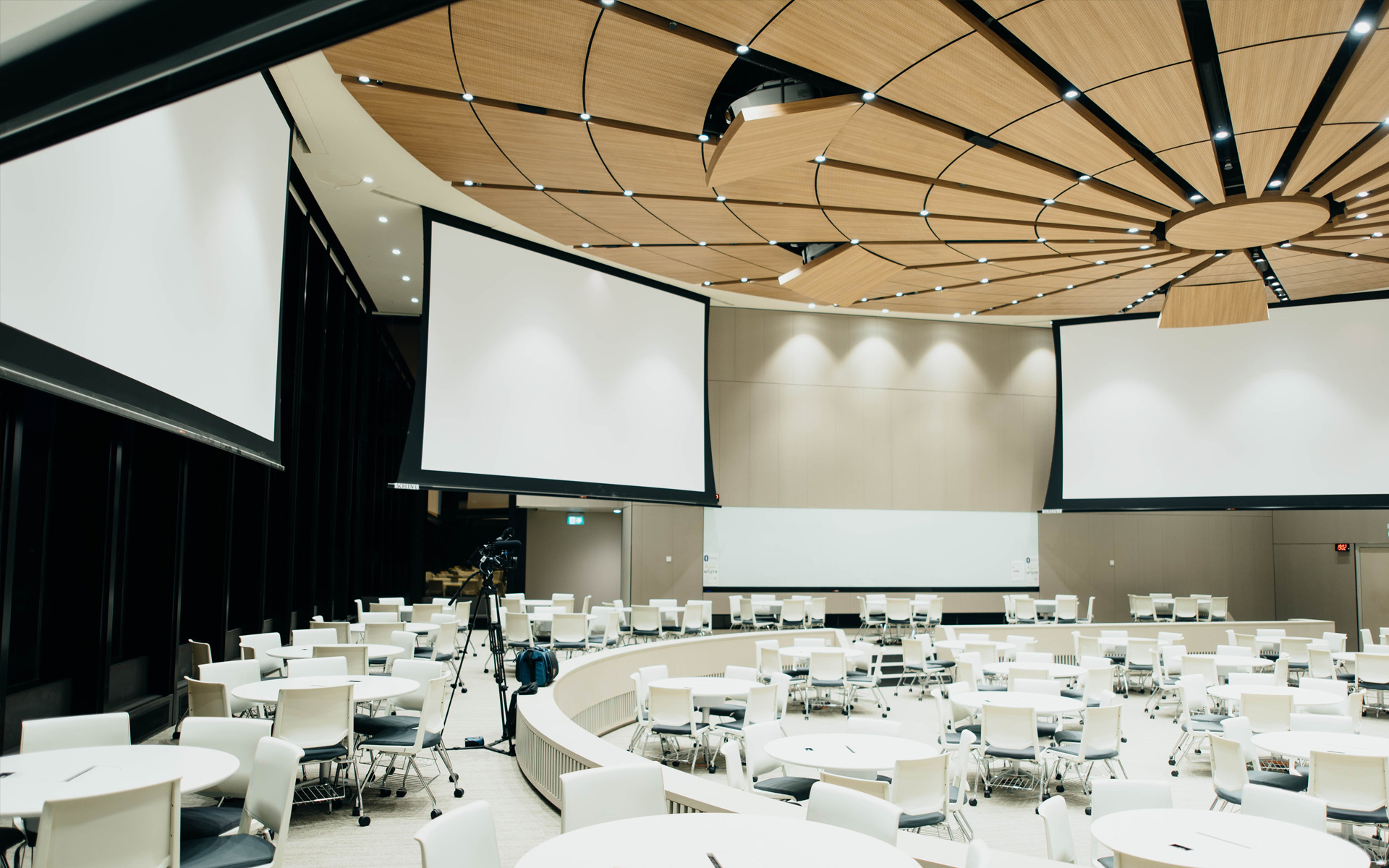
The 3rd ICESGT 2026 will run as a 'hybrid' conference.
The International Conference on Environment, Sustainable, and Green Technology 2026 will take place on 7 August 2026
The 3rd ICESGT 2026 aims to provide a forum for researchers, practitioners, and professionals from the academia, government, and practitioner to discourse on research and development, professionals practice in the field of Public Organization and Sustainability. We welcome researchers, practicioner, students, industry, investors, and people from all walks of life interested in Public Organization and Sustainability to attend the conference and share your experiences and lessons with other enthusiasts, and develop opportunities for cooperation.


Call for papers is open!
THEMATIC AREAS
The innovation of Environment, Sustainable, and green technology for Public Sector: A Call for Actions
THEMATIC AREAS
Sub-themes:
Environment, Sustainable and Management
- Global environmental change
- Ecosystem management
- Integrated ecosystems management
- Sustainable infrastructure
- Landscape degradation and restoration
- Eco-technology and Natural Resource Management
- Ecological and remote sensing
*only accepting the paper with sub-theme’s mentioned.
Sub-themes:
Environmental Policy, Planning & Government
- Environmental restoration and governance
- New environmental policy
- International cooperation on environmental issue
- Smart Cities and Sustainable Urban Planning
- Land Use and Resource Management
- Green Infrastructure Development
- Disaster Risk Reduction and Climate Resilience
Scientific Committee
Editorial Policies
Editors in Chief
Dyah Mutiarin, (Scopus ID: 57205325402)
Expertise : Agile Government for Environmental Issue, Urban Planning and Government Affairs,
Department of Government Affairs and Administration. Universitas Muhammadiyah Yogyakarta, Indonesia
Editorial Boards:
Achmad Nurmandi, (Scopus ID: 35731998300)
Expertise : Urban Planning and Government Affairs, Strategic Management in Public Sector, e-Government, Urban Governance. Department of Government Affairs and Administration. Universitas Muhammadiyah Yogyakarta, Indonesia
Jin Wook Choi, (Scopus ID : 56388868200)
Expertise : Social Sciences, Agricultural and Biological Sciences, Business, Management and Accounting, Energy, Environmental Science. Biomedical Engineering. Korea University, Republic of Korea
Sataporn Roengtam, (Scopus ID : 57196194255)
Expertise : Local Government and Land Use Planning, Public Administration Local Governance Citizen Engagement and Public Policy. College of Public Administration.
Khon Kaen University Thailand, Thailand
Ahmad Martadha Mohamed, (Scopus ID : 56675226700)
Expertise : Public Policy, Environmental and Good Governance, Representative Bureaucracy. School of Government, College of Law, Government and International Studies. University Utara Malaysia, Malaysia
Prathivadi Anand, (Scopus ID : 7102973468)
Expertise : SDGs, Sustainable Cities, Capability Approach, Policy Analysis, Governance Indicators. Forest Management.
University Bradford, United Kingdom
Minhaj Alam, (Scopus ID : 35147665200)
Expertise : Political Studies, International Political Economy, Governance and Development, Population and Environment. Governance and Development. Luleå tekniska Universitet, Ethiopia
Managerial Officer
Aulia Nur Kasiwi, (Scopus ID : 57215903230)
Expertise : Environmental Sustainability Policy
Universitas Gadjah Mada Indonesia
Agustiyara (Scopus ID: 57209212552)
Expertise: Environment Policy, Public Affairs and Adminstration.
Eötvös Loránd University, Hungary
Conference papers must meet all the usual standards of quality. However, reviewers will take into account the nature of conference papers. Review papers are also welcomed and accepted. Reviewers will consider background papers more favourably than would be normal for a regular paper. These allowances shall not go so far as to approve papers of low scientific standard. Papers that have been published in written form elsewhere should not be considered.
Reviewers should consider the following key points related to scientific content, quality and presentation of the papers:
Technical Criteria
- Scientific merit: notably scientific rigour, accuracy and correctness
- Clarity of expression; communication of ideas; readability and discussion of concepts
- Sufficient discussion of the context of the work, and suitable referencing
-
Authors must avoid the plagiarism, and they are encouraged to check the plagiarism with similarity check software. Editors will check the similarity index with Turnitin. ICESGT only accept manuscripts with similarity index less than 15%.
-
The research manuscripts submitted to this conference will be peer-reviewed at least 2 (two) reviewers. Double-blind review is applied, where authors or reviewers’ identities are kept confidential. Final decision of the submitted manuscript is made by Editor based on reviewers’ critical comments.
Quality Criteria
- Originality: Is the work relevant and novel?
- Motivation: Does the problem considered have a sound motivation? All papers should clearly demonstrate the scientific interest of the results
- Repetition: Have significant parts of the manuscript already been published?
- Length: Is the content of the work of sufficient scientific interest to justify its length?
Presentation Criteria
- Title: Is it adequate and appropriate for the content of the article?
- Abstract: Does it contain the essential information of the article? Is it complete? Is it suitable for inclusion by itself in an abstracting service?
- Diagrams, figures, tables and captions: Are they essential and clear?
- Text and mathematics: Are they brief but still clear? If you recommend shortening, please suggest what should be removed
- Conclusion: Does the paper contain a clear conclusion. The conclusion should summarise what has been learned and why it is interesting and useful?