- Suggestions have been made that as generative artificial intelligence (AI) transforms information retrieval and content production methods, the role of public libraries must be redefined from mere material storage spaces into public infrastructure that supports citizens’ AI utilization capabilities and a trustworthy knowledge ecosystem. In particular, given that the ability to formulate “good questions” has become more important than “quick answers” in the era of Large Language Models (LLM), it is argued that libraries must evolve beyond simply providing information into platforms that foster collective intelligence and democracy.
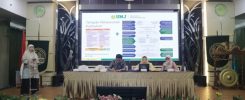
On the afternoon of the 8th, a policy forum titled ‘How Are Libraries Doing in the AI Era’ was held in the first small conference room of the National Assembly Members’ Office Building to discuss the new roles of libraries in the AI era and directions for institutional improvement.
Park Young-sook, Director of Neutinamu Library; Kim Sun-hyuk, Professor of Public Administration at Korea University; and Lee Jin-woo, President of the Korean Library Association, who attended the forum, unanimously agreed that the role of public libraries can actually expand as generative AI provides information more easily and quickly. The core message was that the function of libraries must be redefined as public infrastructure that goes beyond simple material storage and lending to enhance citizens’ AI literacy, verify the reliability of information, and support community discussion and participation.
Director Park Young-sook, who served as the first speaker, diagnosed that the very meaning of information, knowledge, and literacy is changing due to the emergence of generative AI.
Director Park stated, “We live in an era where AI instantly churns out information equivalent to what a few libraries might possess,” adding, “We have no choice but to re-examine information, knowledge, and literacy.” He continued, “Rather than providing precise answers quickly, we must focus on cultivating collective intelligence—where we collaboratively formulate questions and share diverse experiences and thoughts—as well as fostering the imagination and public spirit that only humans can possess.”
He argued that the competitiveness of libraries in the AI era does not lie in possessing more information. Rather, he explained that they should function as a ‘democracy platform’ where citizens discuss, collaborate, and create trustworthy knowledge. To this end, he proposed transforming libraries from facility-centered spaces into environments where citizen participation and public discourse operate.
Professor Kim Seon-hyeok also analyzed that in the AI era, the ability to interpret and communicate information is becoming more important than the information itself. “Providing information is no longer the exclusive role of libraries,” Professor Kim stated. “Resolving the ‘communication gap’—where citizens encountering different types of information meet, converse, and build consensus—is becoming a more important task than addressing the digital divide.”
He went on to point out that the current Library Act, which is centered on the collection and preservation of materials, fails to adequately capture the changes of the AI era. He proposed redefining libraries as local community platforms and incorporating functions of citizen participation, community building, and social inclusion into their legal roles.
Professor Kim stated, “The amendment of the Library Act is not merely a revision of legal wording, but a task to redefine the purpose and mission of libraries in line with the AI era,” adding, “South Korea must create a new model by combining its world-class library infrastructure with its strengths of democracy and civic participation.”
Association President Lee Jin-woo emphasized that the role and status of the National Library Commission must be strengthened to provide institutional support for these changes.
Chairman Lee stated, “The National Library Commission must serve as a control tower to coordinate government-wide library policies and oversee national library policies suited for the AI era,” adding that “a policy approach viewing libraries as core national infrastructure is necessary.”
Meanwhile, this policy forum was co-hosted by National Assembly members Kang Deuk-gu, Kim Jae-won, Park Ji-hye, Park Hee-seung, Seo Young-seok, Yoon Hoo-deok, Lee Kwang-hee, Lee Yong-woo, Im Mi-ae, Jung Jin-wook, Choi Hyuk-jin, and Heo Young, and organized by the Korean Library Association and the Council of Public Libraries.